Quick Answer
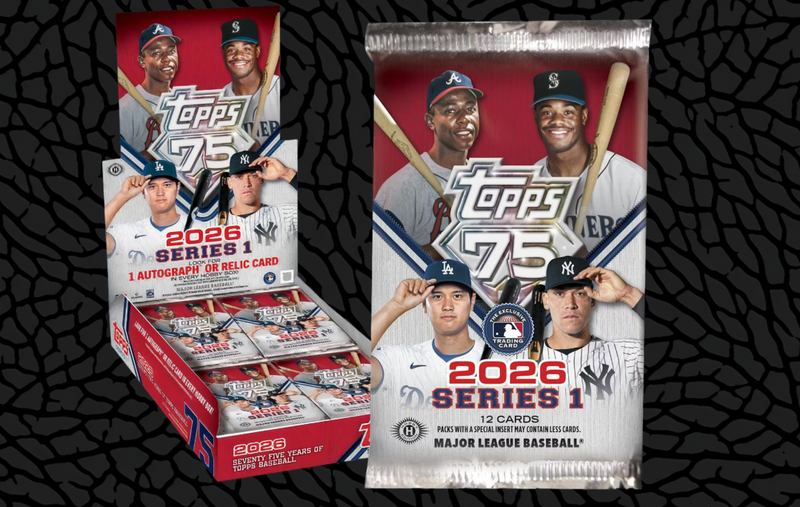
In 2026, a sports card release is best called flagship when it functions as the manufacturer’s main annual base line for that sport, carries a broad foundational checklist, and serves as the core identity release that the brand itself centers. Topps explicitly defines its baseball flagship family as Series 1, Series 2, Update, Chrome, and Chrome Update, and Topps’ 2026 Series 1 guide specifically calls Series 1 the flagship MLB release. Panini has also described Donruss Football as its flagship football product.
Modern collectors use the word flagship constantly, but a lot of the time they are really talking about three different things at once: the brand’s main yearly release, the card line that feels most culturally central, and the rookie cards that become the easiest long-term reference points. Only the first part is truly clean and documentable. The safest factual definition is the manufacturer-level one: flagship is the core annual release line.
That matters because hobby language in 2026 gets messy fast. Between chromium versions, retail-only products, premium patch-heavy sets, limited inserts, and endless parallels, collectors need a way to separate the main line from everything orbiting around it. “Flagship” is still the clearest word for that, as long as it is used carefully.
The Cleanest Definition of Flagship
A flagship release is not automatically the most expensive product, the rarest product, or the flashiest product.
A flagship release is the one that sits at the center of the brand’s yearly identity.
For Topps baseball, that is unusually clear because Topps says it directly. Its own glossary defines Topps Flagship as the core annual baseball release and says that family includes Series 1, Series 2, Topps Update, Topps Chrome, and Topps Chrome Update. Its 2026 Series 1 collector guide then goes a step further by calling Series 1 the flagship MLB release and confirming a 350-card base set.
For football, Panini has used the same kind of language around Donruss. Panini has referred to Donruss Football as its flagship football product, and Panini has described Donruss Optic as the Optichrome version of that flagship release. That distinction matters because it shows how a flagship can have extensions without losing its role as the main paper identity set.
What Actually Makes a Set Feel Flagship
It is the main annual base release
This is the most important trait. If a product is the main release line a manufacturer builds the year around, that is flagship territory. If it is a niche side product, a premium luxury product, or a format-specific experiment, it may matter, but it is not the same thing. Topps says this plainly for baseball, and Panini’s Donruss language supports the same idea in football.
It has a broad, foundational checklist
Topps’ 2026 Series 1 guide confirms a 350-card base set, which is exactly what collectors expect from a flagship structure. Broad checklists help flagship sets feel like annual snapshots rather than specialty drops.
It carries the year’s main design identity
Topps’ own flagship definition says the yearly flagship design often influences other releases. That means flagship is not just about checklist size. It is also about visual authorship. The set tells collectors what that year looks like.
The manufacturer treats it like the center of the line
This is where a lot of hobby arguments should stop. If the company itself calls a release flagship, that matters more than collector shorthand. Topps does that with Series 1 and its broader flagship baseball family. Panini has done that with Donruss Football.
What Flagship Is Not
Flagship is not automatically:
-
the most expensive box
-
the highest-end patch product
-
the rarest parallel ecosystem
-
the hottest release on social media that week
A product can be premium without being flagship. A product can be wildly desirable without being flagship. A product can be more valuable card-for-card than flagship and still not be the line the brand built its season around. That is why Flawless, National Treasures, Dynasty, or other prestige products belong in a different bucket from a true main-line release. This is a structural hobby distinction rather than a manufacturer glossary definition, so it is best treated as collector analysis built on the official flagship definitions above.
Why Collectors Still Care About Flagship
Collectors still care because flagship gives the hobby a common reference point.
When people debate which rookie matters, which version feels most standard, or which annual set best represents a player in that season, flagship releases tend to anchor those conversations. Beckett’s rookie-card guides reinforce the importance of base rookie cards rather than inserts or parallels, which is one reason flagship-style rookie discussions continue to matter. That does not prove that every flagship rookie is the most important rookie in every case, but it does support why flagship products stay central in rookie conversations.
That is also why collector gear matters more than people think. If you build around cards that are easy to understand and likely to stay relevant in hobby memory, you usually care more about protecting and displaying them properly. That is exactly where products like the Matte Black Graded Card Display Case, Toploader Binder - 288 Toploaders, and Graded Card Slab Sleeves (PSA/TAG/CGC)fit naturally into the collector workflow.

Older Cards Help Explain the Idea Better Than New Wax Does
One reason the word flagship still has power is that older mainstream cards make the concept feel obvious.
When collectors look back at earlier eras, the hobby did not feel nearly as fragmented. A card like 1980 Topps Rickey Henderson #482 sits inside a mainstream Topps release that is easy to understand. The same goes for 1989 Upper Deck Ken Griffey Jr. #1, which remains one of the most recognizable cards from a major mainstream release. Those examples are not proof that every old card market was simple, but they do show why collectors still crave a clean center of gravity.
The same logic shows up in cards like 1987 Topps Bo Jackson #170 and 1986 Topps Traded Barry Bonds #11T. These are not important because someone stamped “flagship” on the card itself. They matter because they come from mainstream, widely legible release structures that collectors can still understand quickly decades later.
The 2026 Reality: Flagship Matters More Because the Market Is More Confusing
In a simpler hobby, you did not need to explain flagship as much.
In 2026, you absolutely do.
Collectors are constantly sorting through questions like:
-
Is the paper version more foundational than the chromium version?
-
Does a premium rookie matter more than a flagship rookie?
-
Does a parallel from a side product matter more than a base rookie from the main line?
-
Is a release culturally hot, or is it structurally important?
That is why the topic has become more relevant, not less. The more fragmented the hobby gets, the more valuable it becomes to know which release is actually the center of the brand’s yearly universe. That is also why pieces like Rookie Cards Do Not Mean the Same in 2026 and Should You Grade Sports Cards in 2026? A Data-Driven Guide to PSA, BGS, SGC, and Selling Raw connect directly to this discussion.
A Good Example of Flagship Still Carrying Real Weight
The clearest current example is 2026 Topps Series 1 Baseball. Topps identifies it as the flagship MLB release, and CRDSHP’s 2026 Topps Series 1 Mickey Mantle Buyback: Why This Chase Is Massive shows why flagship still matters when a real hobby story lands inside the main line instead of some forgettable side product. A major chase inside flagship simply hits harder because flagship already has structural meaning.
How to Identify a Flagship Release Fast
If you want the fastest working test, ask four questions:
Is this the main annual base line?
If yes, that is your first major signal.
Does the manufacturer describe it as central or flagship?
That is the strongest single piece of evidence you can get.
Does it have a broad foundational checklist?
That supports the idea that the release is designed to represent the season, not just a niche angle.
Does it act like the visual anchor of the year?
If the look and structure ripple outward into related products, that is another strong sign you are looking at flagship.
Final Take
Flagship in 2026 should not be used as a vague compliment for any popular set. It should mean something specific.
A sports card product is flagship when it is the manufacturer’s central annual release line for that sport or brand family, backed by broad checklist authority and treated as the main identity release by the company itself. Topps makes that explicit in baseball. Panini has made it explicit with Donruss Football. Everything else people layer onto the term can still be useful, but that is where the clean facts end and collector interpretation begins.
If you collect with that lens, the hobby gets easier to read. And if you collect the cards that actually deserve better than a shoebox, CRDSHP already has the tools for that, from the Matte Black Graded Card Display Case to the Toploader Binder - 288 Toploaders, Graded Card Slab Sleeves (PSA/TAG/CGC), and the numbered collector piece that says exactly what it needs to say, the Drop #1 Embroidered Logo Numbered /50.
Tags: sports cards, flagship sports cards, flagship rookie cards, Topps flagship, Donruss Football, sports card collecting, rookie cards, sports card hobby, card collecting strategy, Topps Series 1, CRDSHP